



 Jordan Bevan
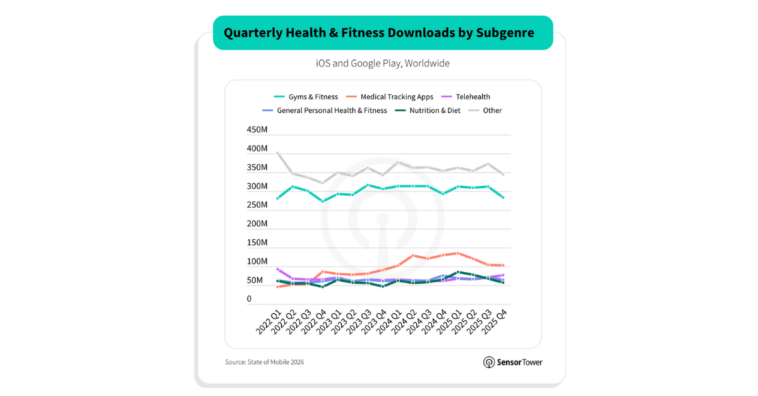
Health and fitness apps generated record in-app purchase (IAP) revenue in 2025, even as download growth slowed, signaling a shift in how digital wellness platforms are monetizing users. Sensor Tower’s latest analysis shows IAP revenue in the category climbed 13% year over year to reach $4.5 billion, while total downloads edged up just 0.8% to 3.96 billion installs.
The latest wave of growth in digital wellness is tied to generative and applied AI tools embedded directly into consumer apps. Nutrition platforms now allow users to photograph meals and receive automated calorie and nutrient breakdowns. Training apps analyze performance metrics and generate customized workout plans based on user data.
This level of personalization has altered the value proposition for paid features. Rather than static content libraries or generic programs, many apps now position AI-powered insights as premium functionality, contributing to stronger conversion rates and higher average revenue per user.
The category’s revenue expansion follows a period of normalization after pandemic-era spikes in 2020–2022. As in-person fitness activities resumed, growth slowed in 2024. The introduction of AI-driven capabilities appears to have reignited spending momentum.
Within the broader health and fitness segment, performance has varied across subcategories. Running and cycling apps have maintained strong traction, reflecting sustained consumer demand for data-driven training tools. Nutrition and diet tracking platforms powered by AI have also seen accelerated revenue growth, with calorie analysis, macro tracking and adaptive meal planning features attracting paying subscribers.
These subgenres have been among the most effective at converting high-intent users seeking measurable health outcomes.
Beyond product development, AI has influenced user acquisition tactics. App Store Optimization (ASO) strategies increasingly incorporate AI-related keywords to capture search demand tied to emerging technology.
In the most recent quarter, 28% of health and fitness apps bid on AI-themed keywords, up from 19% in the fourth quarter of 2024. On average, apps now include eight AI-related keywords per listing — roughly double the level seen a year earlier.
In some cases, the strategy has translated into significant download volume. One AI-focused nutrition app attributed roughly a quarter of its search-based installs to AI-related queries, underscoring the commercial relevance of positioning around generative and automated features.
Despite nearly 4 billion downloads in 2025, the category’s modest 0.8% install growth suggests a maturing market. The stronger revenue trajectory indicates that developers are extracting greater value from existing users rather than relying solely on expansion of the install base.



Comments
Loading…