



 Sophie Blake
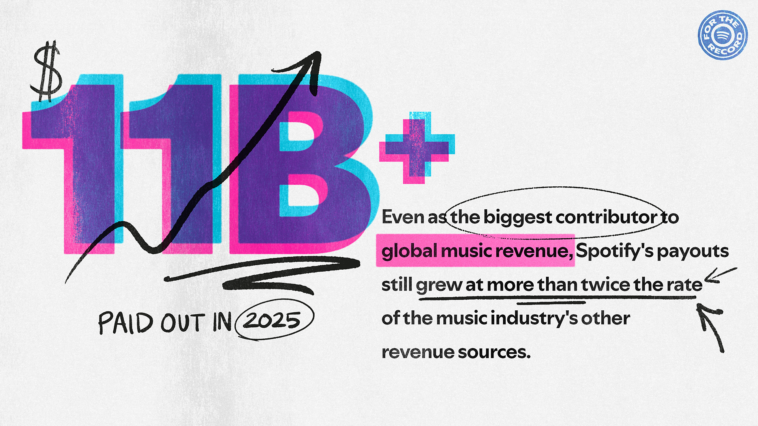
Spotify disclosed that it paid more than $11 billion to the global music industry in 2025, marking a year-over-year increase of over 10% and the highest annual payout reported by the company to date. The figure brings Spotify’s total payments to rights holders since its founding in 2006 to nearly $70 billion, according to company statements.
The Swedish streaming platform said independent artists and labels accounted for roughly half of all royalties paid last year. Spotify also estimates it now represents around 30% of global recorded music revenue, positioning the service as a major contributor to industry-wide revenue growth during 2025. By comparison, YouTube reported payouts of more than $8 billion to the music industry over a recent 12-month period.
Spotify reiterated that it distributes close to two-thirds of its revenue—nearly 70%—to rights holders, with the remaining portion retained for operating costs and reinvestment. That retained share has been directed toward expanding and maintaining the platform, including content formats beyond music such as podcasts, video, and audiobooks, as well as infrastructure to support its growing user base.
The payout announcement arrives amid continued debate over how streaming revenue is distributed. While Spotify pays labels and publishers directly, those entities determine how funds are allocated to artists and songwriters after commissions and contractual deductions. Industry criticism has often focused on the downstream compensation received by creators rather than on gross payouts reported by streaming services.
Spotify also linked its payout growth to broader market trends, including rising subscription prices and an expanding global audience. The company said more than 750 million people worldwide now pay for music streaming services each month across the industry. Spotify itself reported 713 million monthly active users as of the third quarter of 2025 and recently increased premium subscription prices in several markets, including the U.S., where monthly plans now cost $12.99.
Looking ahead to 2026, Spotify outlined areas of continued investment that intersect with artist monetization and discovery. These include expanded use of short-form video and behind-the-scenes content, changes to artist verification and crediting systems aimed at addressing AI-generated and impersonated content, and further development of editorial curation to support new releases. The company also said it plans to enhance tools that connect listeners to live concerts, an area it claims has already generated more than $1 billion in ticket sales through third-party partners.
At the corporate level, Spotify entered 2026 following leadership changes, with founder Daniel Ek transitioning to executive chairman and Gustav Söderström and Alex Norström taking on co-CEO roles. As competition intensifies from rivals such as Apple Music and YouTube, Spotify’s disclosures underscore how revenue growth, pricing strategy, and reinvestment decisions remain closely tied to ongoing scrutiny of streaming’s economic impact on artists and the wider music ecosystem.



Comments
Loading…