



 Maya Robertson
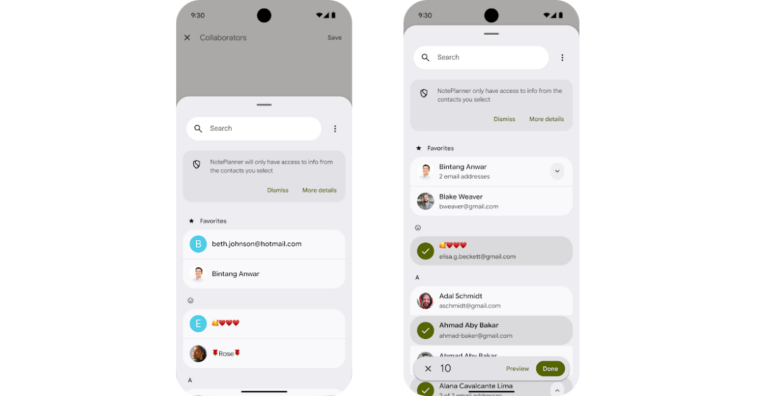
Google has introduced a new contact-sharing feature in Android 17 aimed at reducing how much personal data apps can access, replacing broader permission models with a more controlled, user-driven approach.
The feature, called Contact Picker, is designed to address long-standing concerns around the use of the READ_CONTACTS permission, which historically allowed apps to access a user’s entire contact list. The new system instead enables users to grant access only to specific contacts they choose.
Under the updated framework, apps request contact access through a standardized interface that lets users select one or multiple contacts. Developers can also define exactly what type of information they need—such as email addresses or phone numbers—rather than retrieving full contact records. This marks a shift toward more granular data permissions within the Android ecosystem.
The Contact Picker supports additional controls, including limits on how many contacts can be selected in a single session and the ability to access contacts across different profiles, such as work or private spaces. Once a selection is made, the system generates a temporary session-based identifier that allows the app to retrieve the requested data for a limited time, rather than maintaining ongoing access.
From a technical standpoint, the feature is implemented through a new intent, Intent.ACTION_PICK_CONTACTS, which consolidates data retrieval into a single query. This approach reduces system overhead compared to earlier methods that required multiple queries for individual contacts.
Google has also incorporated backward compatibility measures. On devices running Android 17 or newer, older contact selection intents are automatically routed through the updated interface, although developers must adopt the new API to access advanced features such as multi-selection and fine-grained data requests.
The company is positioning the update as part of a broader effort to minimize unnecessary data access and improve transparency for users. Developers are advised to request only essential data fields and store selected information promptly, as access granted through the Contact Picker is temporary by design.

Comments
Loading…