



 Mobile Marketing Reads
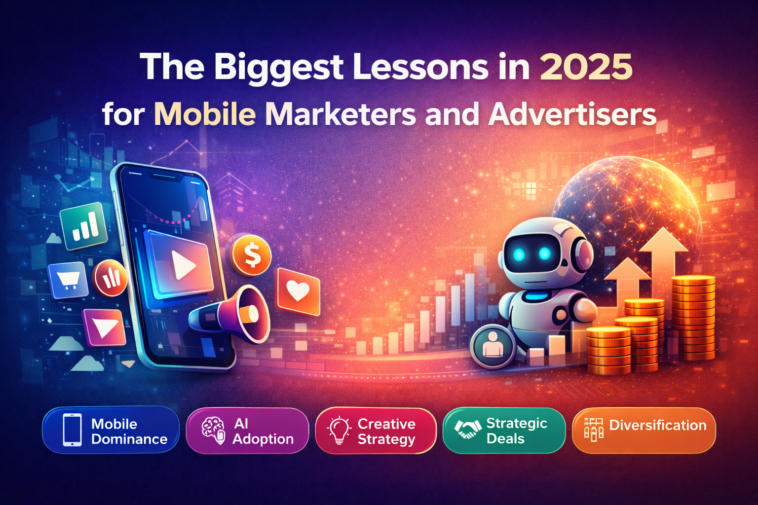
2025 proved to be a pivotal year for mobile marketers and advertisers. As the ecosystem continues to evolve rapidly, this year’s trends, data, and strategic shifts offer essential lessons that will shape best practices going into 2026 and beyond. Below are the key takeaways from Mobile Marketing Reads’ coverage in 2025 — rooted in industry performance data, strategic activity, and market movements.
1. Mobile dominates advertising budgets and consumer spend
One of the most enduring lessons of 2025 is that mobile is now the primary battleground for marketers. According to forecasts, mobile platforms are expected to command an overwhelming share of advertising budgets — with mobile accounting for the majority of U.S. ad spend and poised to absorb more than two-thirds of digital ad budgets globally. Video formats, in particular, drove significant growth as marketers shifted spend to short-form and immersive content.
At the same time, mobile in-app purchases continued to surge, hitting record levels with global IAP revenue exceeding $43 billion in Q3 — signaling strong consumer willingness to transact within apps and validating the importance of in-app monetization strategies.
2. App growth was steady — but strategy mattered more than scale
2025 saw growth in mobile app installs and engagement, with global installs rising 11% year-over-year in the first half of the year. While privacy changes and rising acquisition costs complicated growth strategies, emerging markets and gaming continued to lead expansion, with APAC and LATAM showing particularly strong performance.
For advertisers, this reinforces a core lesson: growth is not exclusively about volume but about efficiency and retention. As acquisition costs increase, performance optimization — particularly via engagement and retention — will be key to sustainable growth.
3. AI isn’t optional — it’s reshaping every aspect of marketing
Generative AI and automation emerged as foundational elements of 2025 advertising strategies. Marketers increasingly adopted AI for creative generation, data analysis, and real-time optimization — but many organizations struggled to integrate AI holistically across creative and media workflows.
Downloads of apps referencing AI skyrocketed, totalling billions of downloads in H1 2025, and AI integrations proved to be a competitive differentiator across categories, from utility apps to content-driven platforms.
4. Creative strategy became a competitive edge
While data and automation improved targeting, creative quality and format innovation emerged as one of the top competitive differentiators. App performance indexes showed that top creatives captured disproportionate share of ad spend and engagement — particularly in gaming where the top 2% of creatives drove the majority of ad investment.
Emerging formats, such as UGC-inspired video and emotionally resonant ads, further emphasize the importance of strong creative direction.
5. Market structure shifted with strategic deals and partnerships
The deal landscape in 2025 highlighted consolidation and strategic realignment. From major acquisitions in ad tech and marketing platforms to funding rounds supporting AI and performance tools, the ecosystem prioritized scale, data infrastructure, and cross-channel capabilities.
M&A and strategic partnerships are reshaping competitive positioning. Marketers should closely monitor these shifts to anticipate platform behavior changes and ecosystem realignments.
6. Diversification beyond traditional app stores and platforms
2025 saw increasing experimentation with alternative distribution and monetization channels. Regulatory changes and shifts in app store policy opened opportunities for alternative app marketplaces and direct engagement strategies that reduce dependency on incumbent platforms.
Marketers also diversified media delivery, incorporating programmatic channels such as broadcast radio via DSP integrations — highlighting the need for cross-screen and cross-channel activation even as mobile remains central.
7. Audience behavior and platform dynamics evolve continuously
User behavior trends in 2025 showed shifts in app usage patterns and engagement formats. AI assistants and utility apps gained traction alongside social and entertainment platforms, with certain genres (e.g., banking, finance) surpassing milestone download figures.
Platform usage reports — such as Snapchat’s 2025 recap — demonstrated evolving social dynamics with voice, group chat, and casual sharing becoming more prominent.



Comments
Loading…