



 Maya Robertson
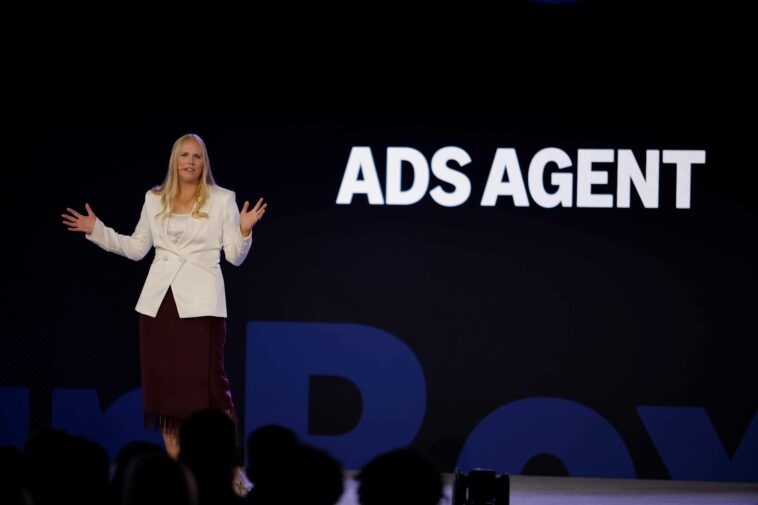
At its annual unBoxed 2025 event in Nashville, Amazon announced a sweeping overhaul of its advertising ecosystem, introducing a unified Campaign Manager that merges its Demand-Side Platform with Sponsored Ads under one interface. The move consolidates the company’s ad operations into a single, AI-powered platform that aims to simplify campaign management, expand automation, and deliver what Amazon calls a more “transparent” approach to advertising.
The update, which launched in beta on November 10, 2025, is part of Amazon’s broader effort to streamline its fragmented ad infrastructure. The unified Campaign Manager combines performance metrics from both sponsored and programmatic campaigns in a single dashboard, offering advertisers consolidated reporting across formats including display, video, audio, and streaming TV.
According to Amazon Ads Vice President of Engineering, Science & Product Kelly MacLean, the platform centralizes campaign data and insights to make measurement and optimization more efficient. “We’re making measurement and optimization easier with campaign insights housed in a centralized reporting hub with standardized metrics across products and accounts,” she said during the keynote. Amazon claims the new system cuts campaign setup time by over 60% and reduces daily management workloads through automation and AI-driven recommendations.
The platform integrates several new AI tools:
- Ads Agent, a conversational AI interface that interprets campaign briefs and automates planning, targeting, and performance analysis through natural language. It can generate SQL queries within Amazon Marketing Cloud (AMC) without requiring data science expertise.
- Creative Agent, an AI creative assistant that analyzes brand assets, product pages, and store content to automatically generate or scale creative assets across channels.
- Full-Funnel Campaigns, a feature that automatically designs and manages campaigns spanning awareness, consideration, and conversion formats, optimizing budgets and audience strategies across Sponsored Products, Sponsored Brands, display, and streaming TV.
Unlike competitors such as Google’s Performance Max or Meta’s fully automated systems, Amazon is positioning its approach as a “crystal box” — automation that remains transparent to advertisers. MacLean said this strategy is meant to give brands visibility into how AI makes optimization decisions. While the system automates targeting and creative delivery, advertisers retain the ability to review recommendations, adjust levers, and access detailed campaign data.
The push for transparency reflects a growing industry concern that as advertising becomes more automated, marketers lose insight into how platforms allocate budgets or determine placements. Amazon’s response includes “insight cards” and cross-channel data views designed to show how campaigns perform throughout the customer journey — from ad impression to purchase.
The unified Campaign Manager also introduces multi-account management for agencies, smart search with natural-language filtering, and guidance cards that suggest optimization actions based on real-time performance. Internal testing cited by Amazon found that the use of smart search reduced bid optimization time by 26%.
The consolidation follows a series of incremental updates Amazon has rolled out through 2024 and 2025 to unify its ad products. In October, the company merged advertiser accounts across DSP and Sponsored Ads, and earlier this year, it opened direct access to Amazon Marketing Cloud for self-service advertisers. These steps reflect a larger shift toward integrating retail media, CTV, and programmatic environments under one operational layer.
Amazon’s advertising division remains a key growth driver, generating $15.7 billion in Q2 2025, up 22% year-over-year. As it extends its AI capabilities, the company is balancing automation efficiency with advertiser oversight — an equilibrium that has become increasingly important as retail media networks expand and competition for transparency intensifies.
With a full rollout expected in 2026, Amazon’s new Campaign Manager marks a turning point for the company’s ad tech strategy: a unified, AI-augmented system that seeks to bridge programmatic scale with human control. Whether advertisers view it as a genuine “crystal box” or simply a more polished black one remains to be seen.


Comments
Loading…