



 Jordan Bevan

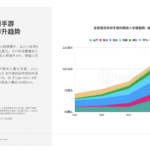
MAGNA’s Winter Update on the “Global Ad Forecast” foresees media owners’ net advertising revenues hitting $853 billion this year, reflecting a robust growth of 5.5% compared to 2022. Global ad spending is anticipated to increase 7.2% in 2024.
The conclusion of 2023 surpassed MAGNA’s expectations outlined in its mid-year forecast update (June 2023: +4.6%). The second half witnessed a notable acceleration in digital ad sales, soaring by +6.3% year-over-year. This upturn followed a sluggish first half performance (1Q23: +2%, 1H23: +4.7%) and can be attributed to economic stabilization and more favorable comparisons, Magna says.
Vincent Létang, EVP, Global Market Research at MAGNA, and author of the report, said:
“As expected by MAGNA back in June, advertising spending re-accelerated in the second half of 2023 after four slow quarters from mid-22 to mid-23. The recovery is driven by easier year-over-year comps and stabilizing economic conditions (inflation slowdown), and these improvements mostly benefit pure-play digital advertising formats. Search formats are driven by retail media; Social and Video formats recover to double-digit growth thanks a better monetization of the fast-growing short vertical video impressions. Meanwhile traditional media owners’ ad revenues – including their digital ad sales – are down by -4% this year (TV -6%). The cyclical events of 2024 (sports, elections) will make reach media and contextual advertising attractive again and stabilize TMO ad revenues: overall +2%, TV +3%.”
The IPG-owned media investment arm anticipates a remarkable 10.5% surge in ad sales for pure-play digital in 2023, reaching $587 billion. This category, encompassing diverse platforms from social apps like TikTok to retail media networks, is projected to constitute 69% of all ad sales. Looking ahead to 2024, the company foresees a continued growth of 9.4% for pure-play digital.
In contrast to the expanding digital ad sales, the overall revenues from television advertising have experienced a decline of -6% this year, reaching $158 billion. Publishing ad sales also witnessed a decrease of -5%, settling at $45 billion, while Audio Media NAR (net advertising revenues) saw a -2% dip, totaling $29 billion. The sole traditional media categories exhibiting growth in 2023 are Out-of-Home, with a +7% increase, reaching $32 billion (now surpassing its pre-COVID market size). Additionally, cinema advertising recorded a +14% growth, reaching $1.9 billion, yet still remaining 35% smaller than its pre-COVID levels.
Examining pivotal markets, the most robust growth this year is once again observed in India, surging by +12% to reach $14 billion, thereby securing its position as the 11th largest ad market globally.
China, the second-largest market, exhibits a faster-than-anticipated recovery from the stagnation induced by zero-COVID in 2021-22, registering a growth of +9.8%. Conversely, Northern European markets face underperformance due to sluggish economic activity, with the UK (#4) growing by +3.9% and Germany (#5) by +2.5%, experiencing significant declines in TMO ad revenues in both markets. In an unusual turn, Southern Europe demonstrates greater resilience this year, with notable growth in France (#6, +5.7%), Italy (#12, +5.8%), and Spain (#14, +7.8%).
In the United States, media owners’ net advertising revenues (NAR) increased by +3.6% to reach $338 billion, featuring declines in National TV (-6%), Local TV (-22%), Audio (-4%), Publishing (-7%), while Out-of-Home saw a growth of +2%, and Search and Social recorded increases of +10% and +14%, respectively. Excluding cyclical ad spend related to elections and global sports events, NAR experiences a surge of +5.4% in 2023, set to accelerate to +5.9% in 2024 (+8.4% when including cyclical events).
In 2024, factors such as economic stabilization, lower inflation, and the return of major cyclical events (US elections, Paris Olympics, Euro Football) are expected to drive ad spend up by +7.2%, reaching $913 billion globally, with an +8.4% increase in the US. TMO ad revenues are projected to recover by +2.2%, while digital pure players’ ad sales are set to rise by +9.4%.
A recent report indicates that the anticipated retail media ad spend in the United States is set to more than double from 2023 to 2027, reaching an impressive total of $109.40 billion. The growth path for US retail media ad spend is strong, with an expected annual expansion of over 20% projected throughout the forecast period until 2027.


Comments
Loading…